
Do You Really Need New Fire Doors? Here’s the Truth About Compliance
Let’s be honest for a second. If you’re a property manager, a landlord, or a business owner, the words “fire door inspection” probably give you a bit of a headache. You’re already picturing the bill. You’re imagining a surveyor walking through your building, pointing at every door, and telling you they all need to be ripped out and replaced.
It’s a common fear, and unfortunately, it’s one that some less-than-scrupulous contractors play on. There’s a prevailing myth in the industry that if a fire door is old, or if it has a slight gap, it’s "non-compliant" and needs to be binned.
At Sorrell Ltd, we like to do things a bit differently. We’re all about straight-talking. We believe that Fire Compliance shouldn’t be a license for contractors to overcharge you for things you don’t need. The truth is, a huge percentage of fire doors that "fail" an inspection don't actually need to be replaced. They just need a bit of professional TLC.
In this guide, we’re going to break down the reality of fire door maintenance in 2026, help you navigate the maze of building maintenance services, and show you how to keep your people safe without draining your entire annual budget.
The "Age" Myth: Is Old Always Bad?
One of the first questions we get asked is: "This building is twenty years old, surely the doors aren't up to standard anymore?"
Here is the reality: Age does not automatically equal non-compliance. In the UK, the regulatory focus isn't on making sure every door is the newest model on the market. Instead, the law focuses on whether the door is maintained in working order.
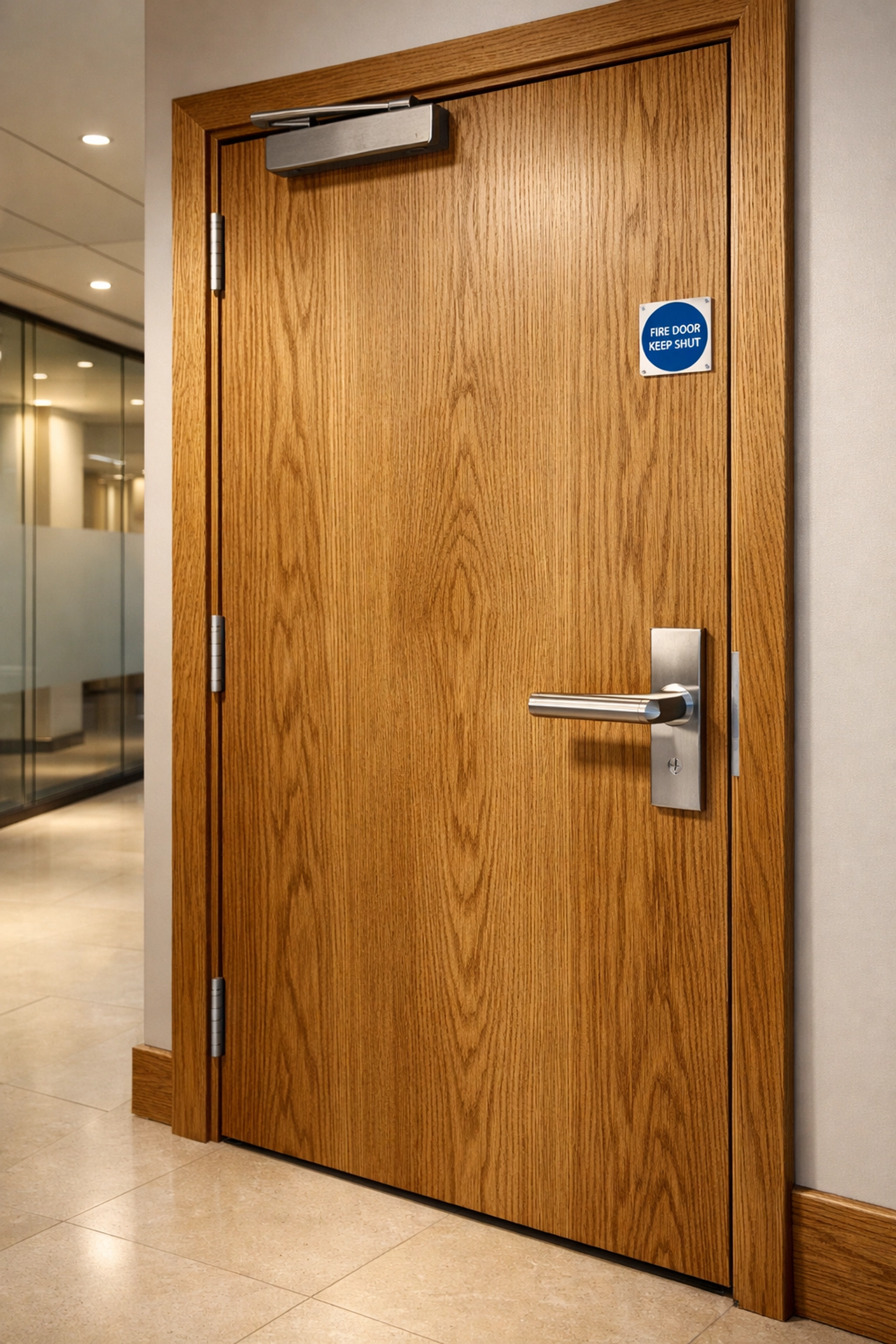
If you have a solid timber fire door that was installed correctly fifteen years ago, and it has been looked after, it might still be perfectly compliant. As long as it passes its regular fire door inspections, you aren't legally required to upgrade it just because a newer version exists.
Now, there is a caveat. By September 2029, new installations will need to meet newer EN classifications. But for the doors you have right now, the goal is integrity and functionality. If the door still resists fire and smoke as it was designed to do, it stays.
When Can You Repair Instead of Replace?
This is where you can save a significant amount of money. Many "failures" found during an inspection are related to components that are easily fixed. Think of a fire door like a car; just because the brake pads are worn doesn't mean you need a new engine.
Here are the most common issues that can be solved with simple maintenance rather than full Fire Door installations:
1. The 4mm Gap Rule
One of the most frequent reasons a door fails is the gap between the door and the frame. If the gap is larger than 4mm (or about the thickness of a £1 coin), it can allow smoke and flames to bypass the door.
The Fix: Often, this isn't because the door is the wrong size. It’s because the hinges have dropped or the building has settled. Re-hanging the door or adjusting the hinges can often bring that gap back into compliance for a fraction of the cost of a new door.
2. Damaged Intumescent Strips
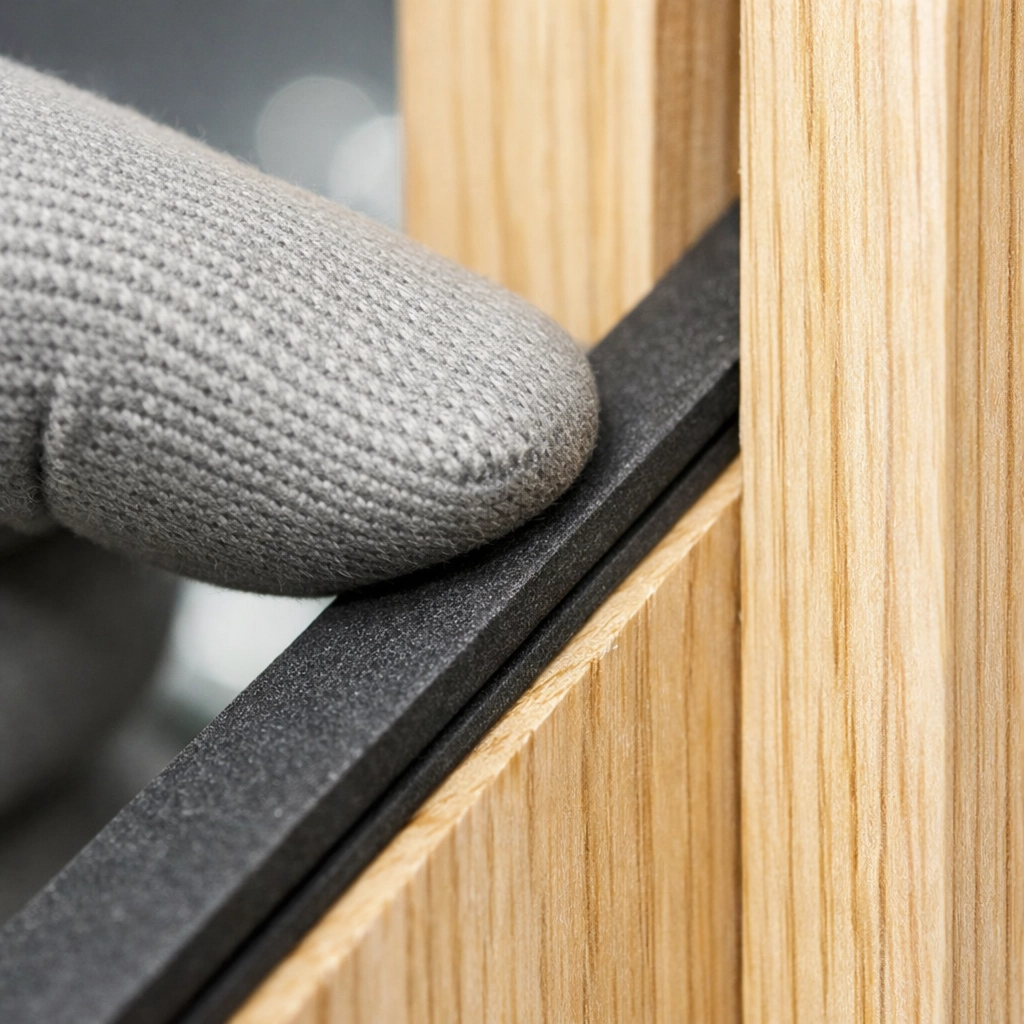
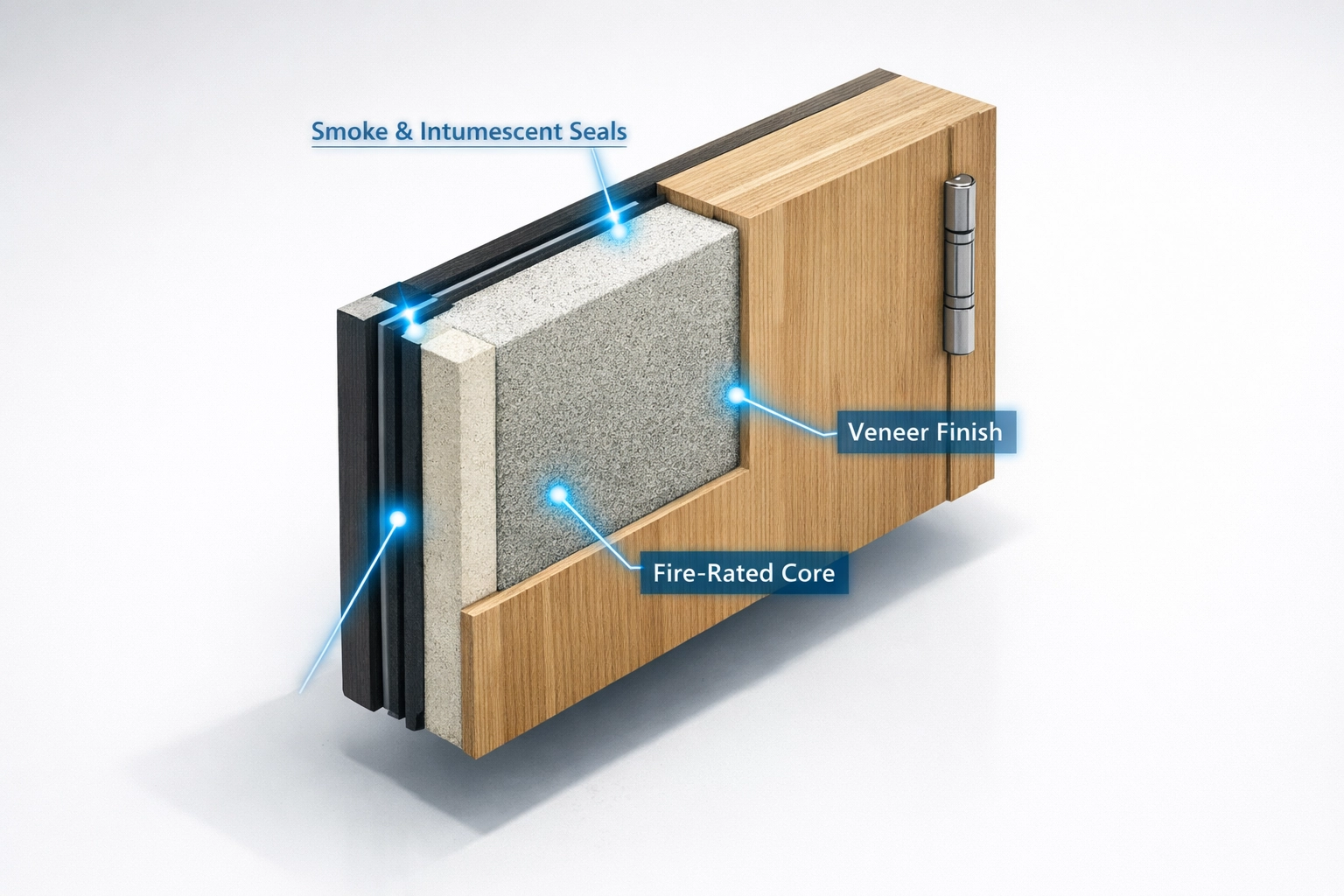
These strips are the magic ingredient. When they get hot, they expand to seal the gaps around the door. If they are painted over, peeling, or missing, the door fails.
The Fix: You don't need a new door. You just need a technician to meticulously remove the old strips and install new ones. It’s a standard part of our building maintenance services.
3. Faulty Door Closers
A fire door is useless if it’s propped open or doesn't shut all the way back into the frame. Over time, hydraulic closers lose tension.
The Fix: Most closers can be adjusted or, at worst, replaced individually. You don't need to replace the entire leaf and frame just because the closer is tired.
4. Cracked Glass (Vision Panels)
If the fire-rated glass is cracked, it’s a failure.
The Fix: In many cases, the glass and the beading can be replaced by a specialist, provided the integrity of the door leaf itself hasn't been compromised.
When Replacement Is Actually Your Responsibility
We’d love to tell you that every door can be saved, but that wouldn't be "straight-talking." Sometimes, replacement is not optional: it is your responsibility to ensure the safety of the building’s occupants.
You will likely need new Fire Door installations if:
The Core is Damaged: If the door has been kicked in, or if there’s a hole drilled all the way through it (that isn't for a compliant lock), the fire integrity is gone.
Severe Warping: If the door leaf has twisted or warped so much that it can no longer sit flush in the frame, no amount of hinge adjustment will fix it.
Non-Fire Rated Doors: If a previous owner installed a standard "hollow-core" internal door where a fire door should be, it has to go. There is no way to "upgrade" a standard door to a fire-rated one effectively.
Frame Failure: If the frame itself is rotting or pulled away from the wall fabric, the entire unit usually needs to be replaced to ensure the fire stop is continuous.
The Legal Reality in 2026: It’s Not a Suggestion
Since the update to the Fire Safety (England) Regulations, the scrutiny on property managers has never been higher. For residential buildings over 11 meters, you are now required to perform:
Quarterly checks of all fire doors in communal areas.
Annual checks of all flat entrance doors.
These aren't just "quick looks." They need to be documented. If there’s an incident and you can’t show a paper trail of these inspections, the legal consequences are severe. This is why we emphasize Fire Risk Assessments as the foundation of your safety strategy.
Maintaining your doors through regular, professional building maintenance services isn't just about saving money on replacements; it’s about risk mitigation. A well-maintained door is a compliant door.
How to Tell if You're Being Overcharged
If a contractor walks into your building and gives you a quote for 50 new doors without checking the hinges, the seals, or the closers on a single one, run.
A professional approach: the Sorrell approach: starts with an evaluation. We look at the "building fabric" as a whole. We identify which doors can be saved, which need a minor tweak, and which are genuinely dangerous.
Pro Tip: Always ask for a detailed "Schedule of Works." If the report just says "Replace Door," ask why. If the reason is "damaged smoke seal," tell them you want the seal replaced, not the door. Being an informed client is the best way to keep your maintenance budget under control.
Why "DIY" Maintenance is a Bad Idea
We’re all for saving money, but Fire Compliance is one area where the "handyman" approach can backfire. Fire doors are precision-engineered pieces of life-safety equipment.
If you use the wrong type of hinges, or if you install a letterbox that isn't fire-rated, you have effectively turned that fire door into a piece of scrap wood. Every component: from the locks to the glue used for the strips: must be compatible and certified.
Our team at Sorrell Ltd is trained to understand these complexities. We ensure that every repair we carry out maintains the door’s original certification. It gives you peace of mind, knowing that if the worst happens, the doors will do exactly what they were designed to do: save lives.
The Bottom Line
You probably don't need as many new doors as you think you do. By shifting your focus from "reactive replacement" to "proactive maintenance," you can significantly extend the life of your building’s assets.
At Sorrell Ltd, we pride ourselves on being the partners you can trust for honest, expert advice. Whether you need a comprehensive suite of building maintenance services or a specific set of fire door inspections, we’re here to help you navigate the regulations without the stress.
Don't wait for your next official inspection to find out your doors are failing. Taking action now can save you thousands in the long run.
Ready to get your building back on track? Book a consultation with our team today and let’s see what we can save you.
Comments